
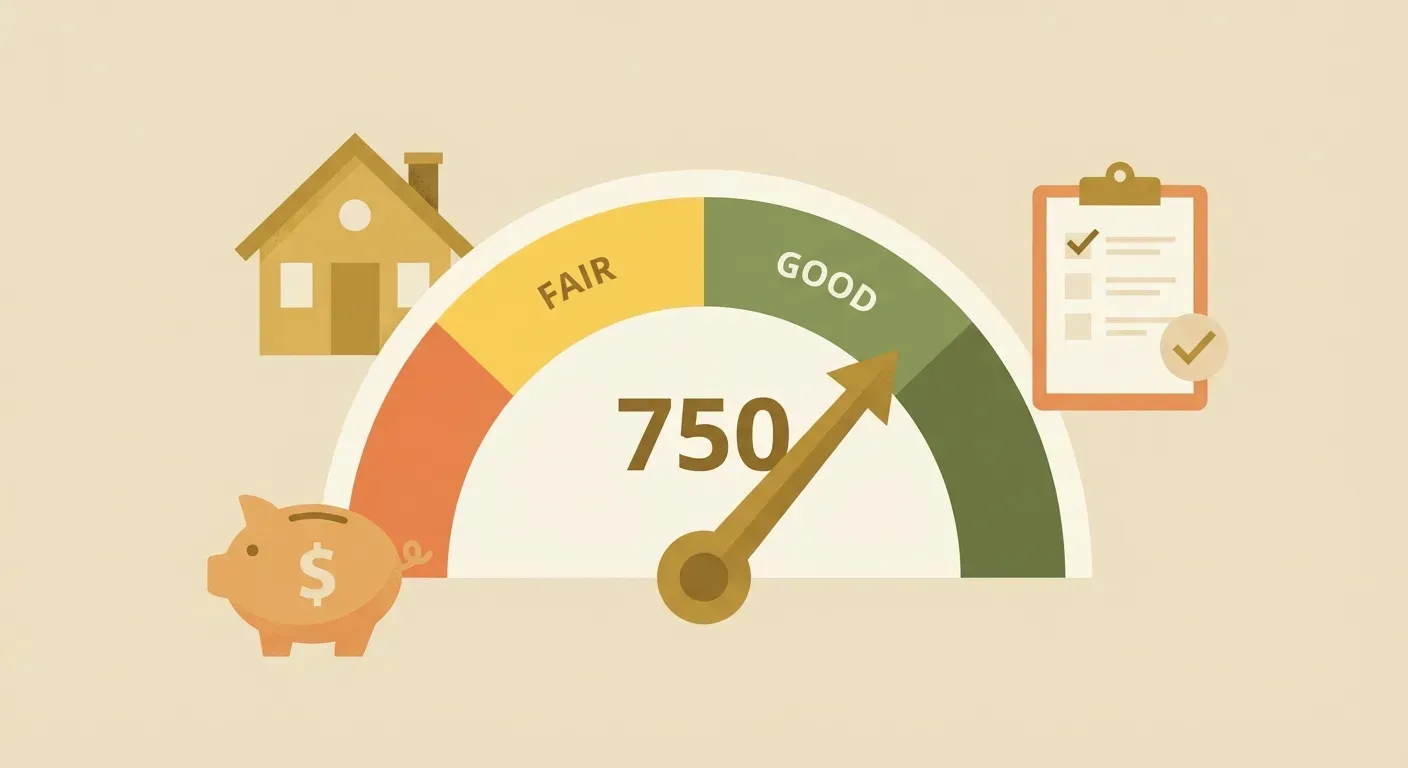
Your credit score is a three-digit number that can make or break your mortgage application. It determines whether you qualify, what interest rate you receive, and how much you'll pay over the life of your loan. On a $300,000 30-year fixed mortgage, the difference between a 620 and 760+ credit score can mean $150 to $200 more per month — and $56,000 to $77,000 more in total interest.
The good news: credit scores can be improved with consistent effort and the right strategies. This guide walks you through a practical, step-by-step plan to build your credit and position yourself for the best mortgage terms possible.
This article is for educational purposes only and does not constitute financial advice. Consult a qualified financial advisor or credit counselor for guidance tailored to your situation.
What Credit Score Do You Need to Buy a Home?
Different mortgage programs have different minimum credit score requirements:
- Conventional loans: Minimum 620 credit score
- FHA loans: Minimum 580 for a 3.5% down payment; scores of 500–579 may qualify with 10% down
- VA loans: No official minimum from the VA, but most lenders require 620
- USDA loans: No official minimum, but most lenders require 640
Keep in mind that meeting the minimum doesn't guarantee the best rate. Scores of 760 and above typically qualify for the lowest available interest rates, while scores below 680 see the steepest rate penalties.
Understanding What Makes Up Your Credit Score
Your FICO score is calculated from five factors, each carrying a different weight:
- Payment history (35%) — Whether you've paid your accounts on time. This is the single most important factor.
- Amounts owed / credit utilization (30%) — How much of your available credit you're currently using. Lower is better.
US Home Portal Editorial Team
Our team of mortgage and real estate experts creates in-depth guides and articles to help you make informed decisions on your path to homeownership.