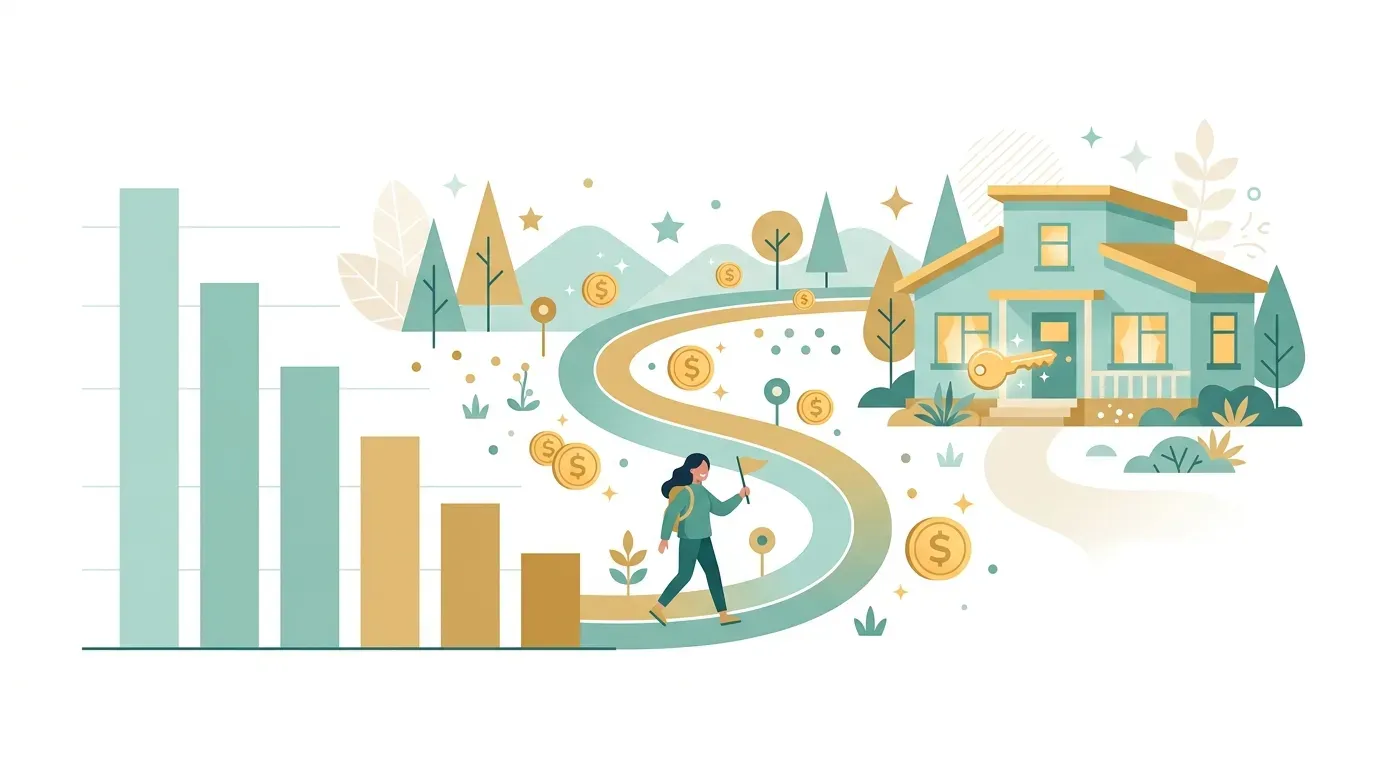
Paying off debt can feel overwhelming, especially when you're working toward a major financial milestone like buying your first home. Without the right financial education, many people struggle to navigate their options and end up stuck in cycles of minimum payments and mounting interest. The truth is, understanding how to pay off debt faster is one of the most important steps you can take toward homeownership — and financial freedom in general.
In this guide, we'll walk you through proven debt payoff strategies, practical budgeting methods, and real-world examples of how reducing debt can open the door to better mortgage terms. Whether you're preparing to apply for a mortgage or simply want to take control of your finances, these strategies can help you get there faster.
This article is for educational purposes only and does not constitute financial advice. Consult a qualified financial advisor for guidance tailored to your situation.
Why Paying Off Debt Matters for Homebuyers
If you're planning to buy a home, your debt load directly affects your ability to qualify for a mortgage. Lenders evaluate your debt-to-income ratio (DTI) — the percentage of your monthly gross income that goes toward debt payments. Most mortgage programs require a DTI of 43% or lower, and a lower DTI can help you qualify for better interest rates.
Here's how carrying debt impacts your homebuying journey:
- Lower credit scores — High credit card balances increase your credit utilization ratio, which drags down your credit score
- Reduced borrowing power — The more debt you carry, the less home you can afford
- Higher interest rates — Lenders charge higher rates to borrowers with more debt and lower scores
- Loan denial — Too much debt can disqualify you from FHA, conventional, and other loan programs entirely
US Home Portal Editorial Team
Our team of mortgage and real estate experts creates in-depth guides and articles to help you make informed decisions on your path to homeownership.