

Most people picture buying a home as one big decision. It isn't. It's about a dozen smaller decisions spread over two to four months, and each one has a deadline attached.
Miss a deadline and you can lose your earnest money, your rate lock or the house. Hit them all and closing day is mostly signing your name.
This guide walks you through the homebuying process in the order it actually happens, with realistic timeframes for each stage. If you want a printable list of tasks, our step-by-step homebuyers checklist covers that. This piece is about timing: what happens when, how long it takes, and where buyers usually get tripped up.
The Homebuying Process at a Glance
Here's the typical timeline for a financed purchase. Your market and your lender will move these numbers around, but the order rarely changes.
- Get your finances ready: 1 to 6 months before you shop.
- Get pre-approved: 1 to 10 days.
- Shop for a home: 4 to 12 weeks, sometimes longer.
- Make an offer and negotiate: 1 to 7 days.
- Under contract (inspection, appraisal, underwriting): 30 to 45 days.
- Final walkthrough and closing: the last 24 to 72 hours.
From the day you get pre-approved to the day you get keys, most first-time buyers should plan on 2 to 4 months. Cash buyers can close in as little as 1 to 2 weeks, because there's no loan to underwrite.
Stage 1: Get Your Finances Ready (1 to 6 Months Out)
This is the stage people skip, and it's the one that sets your price range and your rate.
Start with three numbers:
- Your credit score. Many conventional loans start at 620. FHA allows 580 with 3.5% down. A higher score usually means a lower rate, and even a quarter point matters over 30 years.
- Your debt-to-income ratio (DTI). Lenders add up your monthly debts plus the new house payment and divide by your gross monthly income. Many programs top out around 43% to 50%. Lower is better.
- Your cash. You need a down payment (3% for some conventional loans, 3.5% for FHA, 0% for VA and USDA if you qualify), plus closing costs, plus a cushion.
That last number surprises a lot of buyers. Closing costs typically run 2% to 5% of the loan amount, and they're due on top of your down payment. Our guide to understanding closing costs breaks down every fee and how to lower it.
If your score needs work, give yourself at least 3 to 6 months. Paying down card balances and fixing report errors can move a score faster than most people expect. Our guide to building credit for homeownership covers the moves that help most.
And check whether you qualify for help. Many state and local programs offer down payment and closing cost assistance for first-time buyers. Here are the top homebuyer assistance programs worth looking at first.
Stage 2: Get Pre-Approved (1 to 10 Days)
A pre-approval is a lender's written statement of how much they're willing to lend you, based on documents they've actually reviewed. A pre-qualification is a quick estimate based on what you told them. Sellers and agents take the first one seriously. The second, not so much.
Have these ready and the process can take a day or two:
- Pay stubs covering the last 30 days
- W-2s for the last 2 years (tax returns too if you're self-employed)
- Bank and investment statements for the last 2 months
- A photo ID and permission to pull your credit

Talk to at least two or three lenders. Within 3 business days of a full application, each one has to give you a Loan Estimate, a standard form that makes it easy to compare rates and fees side by side. Credit checks from several mortgage lenders within a short window (generally 14 to 45 days, depending on the scoring model) usually count as a single inquiry, so shopping won't hurt your score much.
Two timing notes from experience:
- Pre-approval letters expire. Most are good for 60 to 90 days. If your search runs long, your lender will need updated documents.
- Don't confuse your max with your budget. The pre-approval tells you what the bank will lend. Your budget is what you can comfortably pay every month after childcare, savings and everything else.
Not sure which loan type fits? Our comparison of FHA vs. conventional loans walks through down payment, mortgage insurance and credit requirements.
Stage 3: Shop for a Home (4 to 12 Weeks)
Now the fun part. It's also where your timeline is least predictable, since it depends on inventory in your area and how flexible you are.
Pick an agent before you tour. Since 2024, you'll typically sign a written buyer agreement with your agent before seeing homes, and it spells out how they get paid. Read it. Ask whether the seller is expected to cover their fee and what happens if they don't.
A few habits keep the search from dragging:
- Write down your must-haves and deal-breakers before you look. Three to five must-haves is plenty.
- Tour in batches. Seeing 4 to 6 homes in one afternoon makes comparisons easier than one at a time over weeks.
- Run the payment, not the price. A $15,000 difference in price is roughly $100 a month at today's rates. A high property tax bill or HOA fee can cost you more than that.
If you have questions about the search itself, we've answered the most common ones in our homebuyer questions guide.
Stage 4: Make an Offer and Negotiate (1 to 7 Days)
Your offer is a contract once the seller signs it, so the details matter more than the price alone. Expect these pieces:
- Price and financing. Your loan type and down payment.
- Earnest money. Usually 1% to 3% of the price, deposited within a few days of acceptance. It's credited toward your purchase at closing.
- Contingencies. Your exits if something goes wrong. The big three are inspection, appraisal and financing.
- Dates. The closing date and the deadline for each contingency.
Sellers often counter within 24 to 48 hours. Back-and-forth can take a few rounds.
Here's the part buyers underestimate: once the contract is signed, the contingency clocks start running. An inspection contingency is commonly 7 to 10 days. If you miss that deadline and then find a problem, your leverage, and sometimes your earnest money, can be gone.
Stage 5: Under Contract (30 to 45 Days)
Most financed purchases close in about 30 to 45 days from the signed contract. Several things happen at once during this stretch, and you're the person who keeps them moving.

Week 1: Inspection and Rate Lock
Schedule the home inspection right away. It typically costs $300 to $500 and takes 2 to 4 hours. Go if you can. You'll learn more walking the house with the inspector than you will from the report. Our home inspection checklist shows what a good inspector should look at.
Decide when to lock your rate. Common locks run 30, 45 or 60 days. Make sure yours covers your closing date with a few days to spare, since extensions cost money.
Weeks 1 to 2: Repair Negotiations
If the inspection turns up problems, you can ask the seller to fix them, give you a credit, or lower the price. Credits are often cleaner than repairs, because you control who does the work. Focus on safety, structure, roof, water and major systems. Don't spend your leverage on a loose cabinet door.
Weeks 2 to 3: Appraisal
Your lender orders the appraisal. If it comes in at or above your price, you're fine. If it comes in low, you have choices: renegotiate with the seller, bring extra cash, challenge the appraisal with better comparable sales, or walk away if your appraisal contingency allows it.
Weeks 2 to 5: Underwriting
An underwriter verifies everything. Expect requests for an updated pay stub, a letter explaining a deposit, or another bank statement. Answer the same day if you can. Slow replies are one of the most common reasons closings slip.
This is also when deals fall apart for avoidable reasons. Until you have keys:
- Don't change jobs.
- Don't open new credit cards or finance a car or furniture.
- Don't move large sums of money around without telling your lender.
Before Closing: Insurance and Title
You'll need a homeowners insurance policy in place before closing, and many lenders want proof a week or more ahead. Get quotes early in the contract period. Meanwhile, the title company searches public records to make sure the seller can legally transfer the home.
Stage 6: The Final Walkthrough and Closing Day
At least 3 business days before closing, you'll receive your Closing Disclosure. Compare it to your Loan Estimate line by line. If something jumped, ask why before you sign, not at the table.
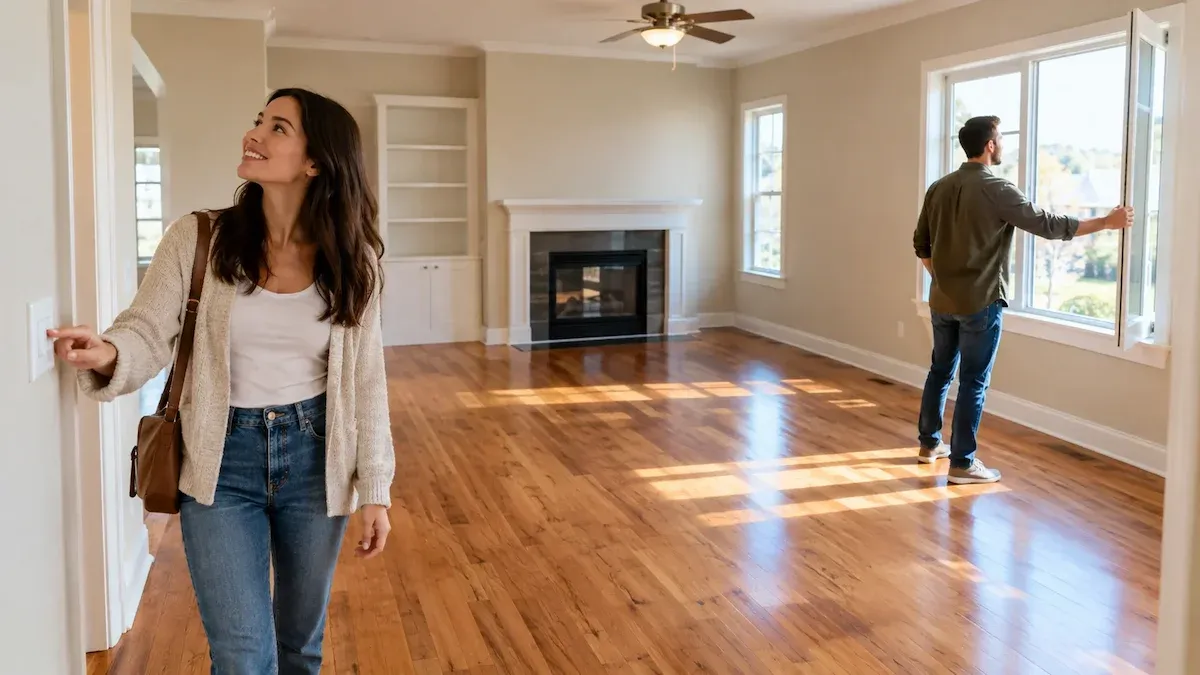
The final walkthrough usually happens 24 to 48 hours before closing. You're checking that the house is in the condition you agreed to: agreed repairs are done, appliances work, nothing was damaged in the move-out and the seller left what the contract says they'd leave. Run the faucets. Flip the switches. Open the garage door.
On closing day you'll sign the loan documents and the deed paperwork, usually in an hour or two. One warning we give every buyer: wire fraud targets closings. Before you send your cash to close, call the title or escrow company at a number you found yourself and confirm the wiring instructions out loud. Never trust instructions that arrive only by email.
When the loan funds and the deed records, the home is yours. In many states that happens the same day. In some, it can take a day or two.
Where the Homebuying Process Usually Goes Off Track
After watching a lot of these transactions, the same five problems show up again and again:
- Shopping before pre-approval. You fall for a house, then learn your budget is $40,000 lower than you thought.
- Budgeting only for the down payment. Closing costs and moving costs arrive at the same time.
- Missing a contingency deadline. The calendar keeps running even when you're busy.
- Slow document turnaround in underwriting. A one-day delay can push your closing date.
- New debt before closing. A financed couch can change your approval.
Put every deadline from your contract into your phone the day you sign. It's the single easiest way to protect yourself.
Ready to Start Your Homebuying Process?
Buying a home is a sequence, not a single leap. Get your finances ready first, get a real pre-approval, shop with a clear payment in mind, and treat every contract deadline as fixed. Do that and most of the stress goes away.
US Home Portal doesn't sell mortgages or list homes. We help you understand each step and connect you with vetted lenders, agents and title professionals through our professional network, in all 50 states. If you're buying for the first time, start with our first-time buyer resources.
Have a question about your timeline? Call us at (866) 790-4488, email info@ushomeportal.com, or reach out through our contact page.
This article is general educational information, not financial, legal or mortgage advice. Timelines, loan limits and program rules vary by lender, loan type and location and change over time. Talk with a licensed mortgage professional about your situation.
US Home Portal Editorial Team
Our team of mortgage and real estate experts creates in-depth guides and articles to help you make informed decisions on your path to homeownership.